International expansion has always been one of the most exciting growth routes for franchise brands. It brings the possibility of new markets, new partners, stronger brand recognition and a much larger customer base. But the environment around international growth has changed.
For many franchisors, the ambition is still there, but the assumptions around speed, market entry and scalability need more scrutiny. Recent years have shown how quickly global events can affect everyday operations, from freight costs and product availability to consumer confidence, staffing, regulation and the reliability of local supply chains.
The World Bank has pointed to persistent trade tensions and policy uncertainty as major headwinds for the global economy, while UNCTAD has reported that Red Sea disruption has forced ships to reroute around the Cape of Good Hope, increasing voyage times, reducing effective shipping capacity and raising operating costs. For franchisors looking beyond their home market, those are not abstract macroeconomic issues. They can influence how quickly a brand can open, how much it costs to operate, and whether the model remains attractive for local partners.
International growth is still happening
The point is not that international expansion has become too risky, plenty of brands are still moving into new markets, and franchising remains a strong route for doing that. What has changed is the level of discipline required before a brand enters a market.
A concept that works well in one country may still need adaptation elsewhere. Property costs may be different, employment rules may change the staffing model, suppliers may not be as easy to access, customers may have different expectations, and the role of the local partner may be more important than the franchisor first expected.
Speed can still be valuable, especially when a brand has momentum, but speed without resilience can create problems quickly. A new market needs more than a launch plan. It needs a model that can keep working when conditions shift.
Why local partners matter more
A strong local partner has always been valuable in international franchising, but in the current environment, that role feels even more important.
Local partners understand the trading culture, customer expectations, property market, labour conditions and supplier landscape in a way that is difficult to replicate from head office. They can also help a brand avoid the mistake of treating international expansion as a copy-and-paste exercise. This is one reason partner-led growth models are worth watching.
IWG is a useful example. In its 2025 Annual Report, the flexible workspace group reported opening 782 new locations and signing 1,089 new centre deals in its managed and franchised segment. The model allows IWG to expand its network through partners while reducing the capital intensity that can come with owning and operating every location directly.
Not every franchisor will operate like IWG, of course, but the principle is relevant: when expansion relies on the right partners, the brand can combine central systems with local knowledge, which can be especially valuable when markets are less predictable.
Market entry is becoming more selective
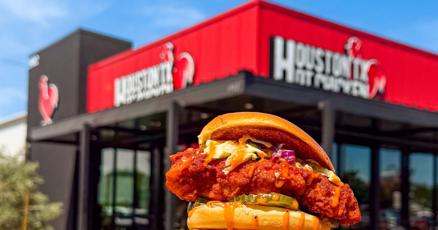
Recent international expansion examples also show how valuable it can be to enter a market with an established local operator.
Houston TX Hot Chicken, for example, has announced its UK entry through a development deal with PizzaExpress. The plan includes three UK openings in 2026 and a longer-term target of 50 sites over the following three years.
That kind of arrangement is interesting because it brings together an incoming brand with a partner that already understands the UK restaurant market, operating infrastructure and consumer landscape. The strength of that local knowledge can matter as much as the strength of the concept itself.
For international franchise growth, franchisors need to understand how the model will be adapted, who will operate it, how the supply chain will work, and what support will be needed once the first wave of excitement has passed.
What resilience means in practice
Resilience can sound like a broad business word, but in international franchising it becomes very practical.
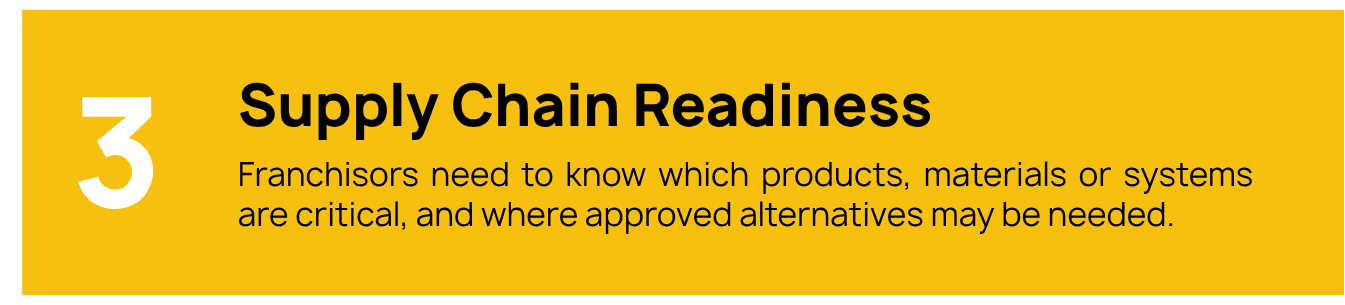
It means understanding which parts of the model are most vulnerable before entering a new market. That could include imported products, specialist equipment, fit-out materials, technology systems, training requirements, local staffing assumptions, pricing sensitivity or the availability of suitable sites.
It also means being clear about which parts of the model can flex without damaging the brand. Some elements will need to be protected because they define the customer experience. Others may need local adaptation so the model feels relevant and commercially workable.
For franchisors, resilience might show up in several areas:


What franchisors should stress-test before entering a new market
Before moving into a new country or region, franchisors should be looking closely at whether the model can work outside its original conditions.
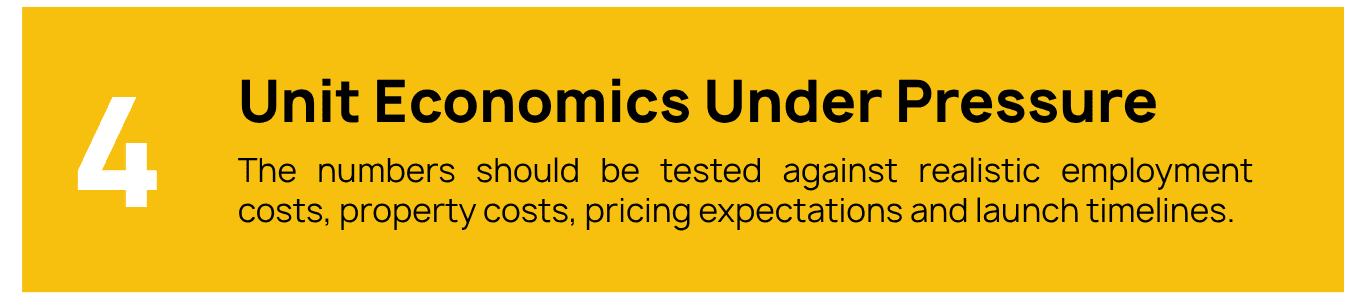
That means testing the commercial case, but also the operational reality. How dependent is the model on one supplier? What happens if equipment takes longer to arrive? Will the price point still work for local customers? Can the brand maintain standards with a different labour market? Is the local partner equipped to scale beyond the first few openings?
The best international growth plans tend to be built around clear assumptions, not optimism alone. They give space for local knowledge, they allow the model to adapt where appropriate, and they are honest about where the pressure points are likely to appear.
The takeaway
International expansion is still a major opportunity for ambitious franchise brands, but the brands most likely to succeed are the ones that build resilience into the model before they enter a new market. That does not mean moving slowly for the sake of it, it means being more deliberate about the partner, the format, the supply chain, the customer proposition and the economics behind growth.
In a more unpredictable world, international expansion still rewards ambition, but ambition needs a stronger operating model around it. Speed may open the door to a new market, but resilience is what helps a brand stay there.
Sources referenced: World Bank Global Economic Prospects January 2026, UNCTAD Review of Maritime Transport 2025, IWG Annual Report 2025, Houston TX Hot Chicken press release.